
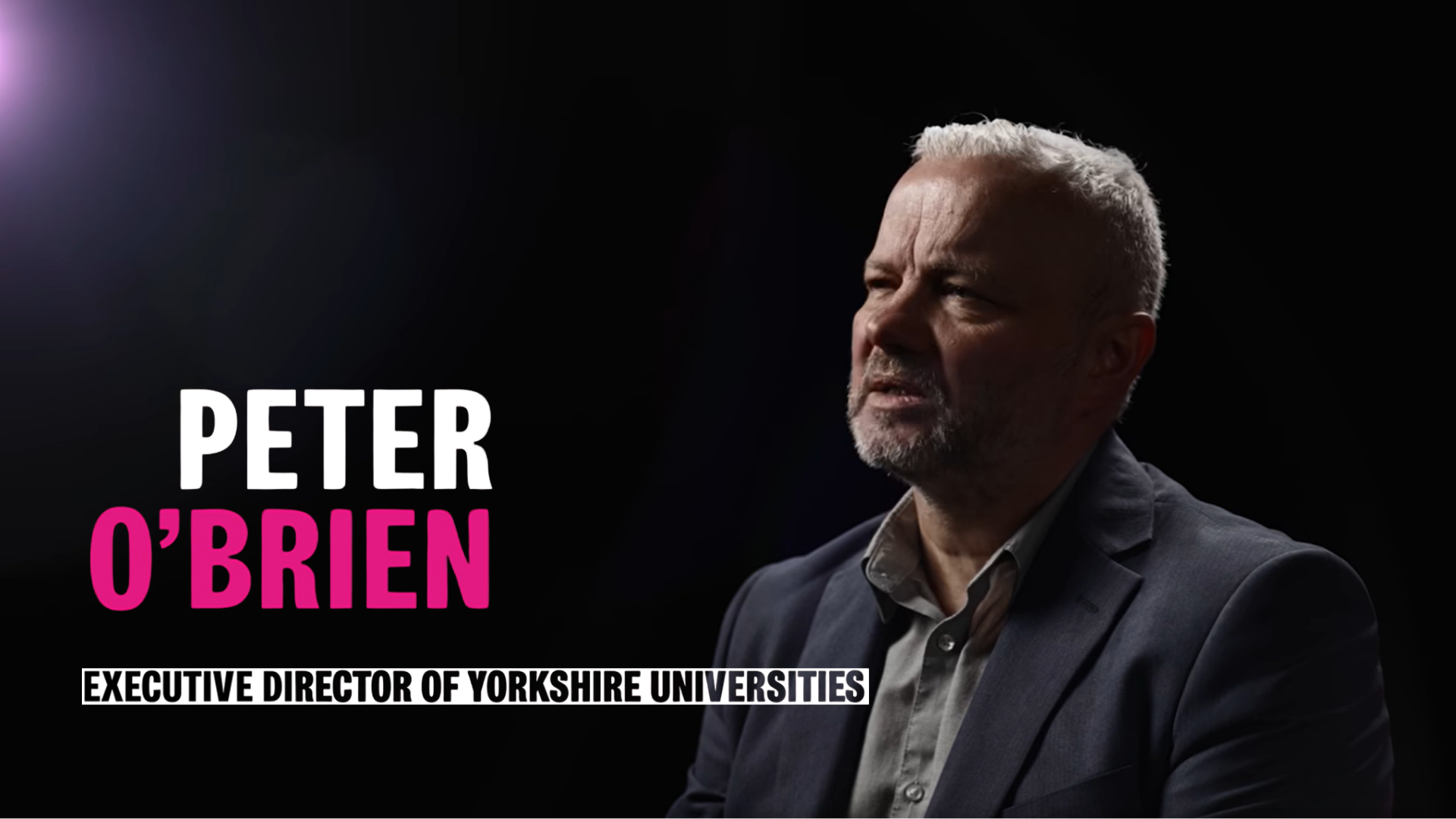
Speech by Dr Peter O’Brien to the University of York and The York Policy Engine (TYPE) Catalyst Dinner, at the Guildhall, York, on Tuesday 10 February 2026.
Good evening.
Thank you for the opportunity to say a few words about the unique value that The York Policy Engine (TYPE) and the University of York bring to the region. Kiran (Trehan) and Anthonia (James) asked me to focus my remarks on three specific areas.
Driving regional growth and economic prosperity
Looking at the importance of growth and regional prosperity, the publicity material for this event – on your tables – suggested that the North, and particularly Yorkshire, are currently in the midst of an important phase of regional growth and transformation, where collaboration and evidence are critical to shaping what comes next. It is hard to disagree with this statement. And yet knowing where we might be heading towards requires knowledge of where we start from and an understanding of the experience of our journey.
Addressing and reversing inter and intra-regional inequalities is one of the most difficult public policy challenges. Failure to resolve these problems – or worse, abdicating responsibility – has left legacies that remain with us today.
The consequences of places struggling to manage the causes and impacts of economic and social shocks, transformation, and adjusting to new environments, are searing, and unfortunately can be enduring. Equally, identifying and anticipating new and emergent opportunities places a test on researchers, policymakers, business and industry. This becomes an even more severe examination when we factor in geography and how places shape and are shaped by both external and internal factors.
This requires ever closer partnerships between universities, government, private sector, and communities. And it should be intrinsic to all higher education institutions that profess to be of their region and claim to be a key contributor to the success of the region. Fortunately, the University of York – a university established and committed to undertake ‘public good’ – is in this space, and has, as illustrated by TYPE, demonstrated the priority it sets on harnessing and convening its world class research in the service of its local community and regional partners.
At a time when funding is increasingly tight, it would be easy to roll back on these objectives. But that would be a mistake and would create a false economy. The University of York has illustrated how to embed and sustain its civic work whilst facing external headwinds buffeting the sector.
With the advent of devolution in York and North Yorkshire – and full coverage of devolved institutions across the wider Yorkshire region – there is greater local autonomy, and new funding to the regions, as well as responsibility on Mayors and others to provide leadership. Universities, such as York, are critical parts of the devolved system of governance in the region and can help to provide much needed and valuable capacity as new institutions are established and find their feet.
The University of York – supported by TYPE – is ideally placed to contribute, through the University’s research assets, insights, data, evidence and innovations on how York and North Yorkshire, building on sectors, such as the bioeconomy, creative industries and tourism, can be more productive, healthier, more resilient, more equal and more prosperous.
Strengthening collaboration across sectors
Second, collaboration is vital. No one institution or sector – internationally, nationally or regionally or locally – can by themselves tackle and solve some of the complex problems we face or realise the new opportunities that are appearing amidst rapid technological change.
Understanding the dynamics of place-based or place-sensitive issues requires universities and partners to adopt multi and inter-disciplinary approaches, which means coordinating and combining social, physical and environmental sciences, as well as arts and humanities. A University, such as York, must increasingly coalesce its research expertise from across all parts of the institution. TYPE lies at the heart of this exercise, providing an all-important catalyst and critical infrastructure.
Crucially, TYPE and the University of York are exemplars in supporting collaborations and partnerships beyond the University.
The Yorkshire and Humber Policy Engagement and Research Network (Y-PERN), and the Yorkshire and Humber Policy Innovation Partnership (YPIP), which have been awarded £10m of investment from UK Research and Innovation, are direct actions stemming from the Memorandum of Understanding (MoU) that the 12 members of Yorkshire Universities signed four years ago with the Yorkshire and Humber Councils Group representing 15 local authorities and 4 Mayoral Combined Authorities. The MoU committed universities and local and regional policymakers to use research, data and evidence to drive more effective and efficient policy, strategy and interventions. Alongside Y-PERN and YPIP is the Yorkshire and Humber Applied Research Consortium, or ARC, funded by the National Institute for Health Research, and one of the leading applied research projects in the country investigating the wider determinants of health.
Y-PERN is distinct within the UK’s research policy engagement landscape in that it comprises a broad range of universities and local and combined authorities brought together through a ‘network of networks’ approach located across a diverse (economically, socially, geographically) region. The University of York as a key partner in Y-PERN, has been fundamental to the early success of the York and North Yorkshire CA, particularly in helping the CA develop its Local Growth Plan, to ensure that the CA’s emerging strategies are evidence-led. The University is also a signatory to the West Yorkshire HE Compact that nine universities signed last October with Mayor Tracy Brabin and the West Yorkshire Combined Authority, reflecting the realities of the economic linkages and inter-dependencies between York and North Yorkshire and the West Yorkshire conurbation.
Enabling communities to thrive through evidence-informed policy
Finally, helping communities and citizens to have more agency and influence over shaping and directing the decisions taken by Government and policymakers that impact on the lives of local people is one of the most important elements of the research policy engagement agenda.
For far too long, many people and places have felt marginalised and abandoned by many of the forces and institutions tasked with creating, driving, and regulating growth and investment. There is a responsibility for those of us working in higher education – including funders – to practice genuine civic engagement and partner with local communities to co-design and co-conduct research on the issues facing local neighbourhoods – whether that relates to health, housing, education, employment, transport, etc – and to work in unison to strengthen and amplify the voices of those who have been forgotten.
The YPIP project, which the University of York is a lead partner in, has, with its innovative community innovation fund and community panel, comprising membership from across Yorkshire, looked to provide some new forms of community empowerment.
In a so-called ‘post-truth’ world, where facts, figures and data are challenged continuously, but often erroneously, and where mistruths are seemingly the norm, institutions, such as the University of York, encompassing TYPE, play a vital role in encouraging and facilitating open, transparent and rigorous debate grounded in evidence. This is why the York Festival of Ideas has been so important in recent years.
I very much value the University of York’s active support for all the work we do at Yorkshire Universities, and within the associated Y-PERN, YPIP and ARC projects. With Charlie Jeffery as Chair of our Board, and supported by Kiran, Anthonia and others in this room, we have leaders who are invested in championing and encouraging us all to work together to find new practical policy solutions to drive real-world change and benefits.
Thank you.
The York Policy Engine Short Film
Following the event, a short film was published featuring Dr Peter O’Brien speaking on devolution and The York Policy Engine.