
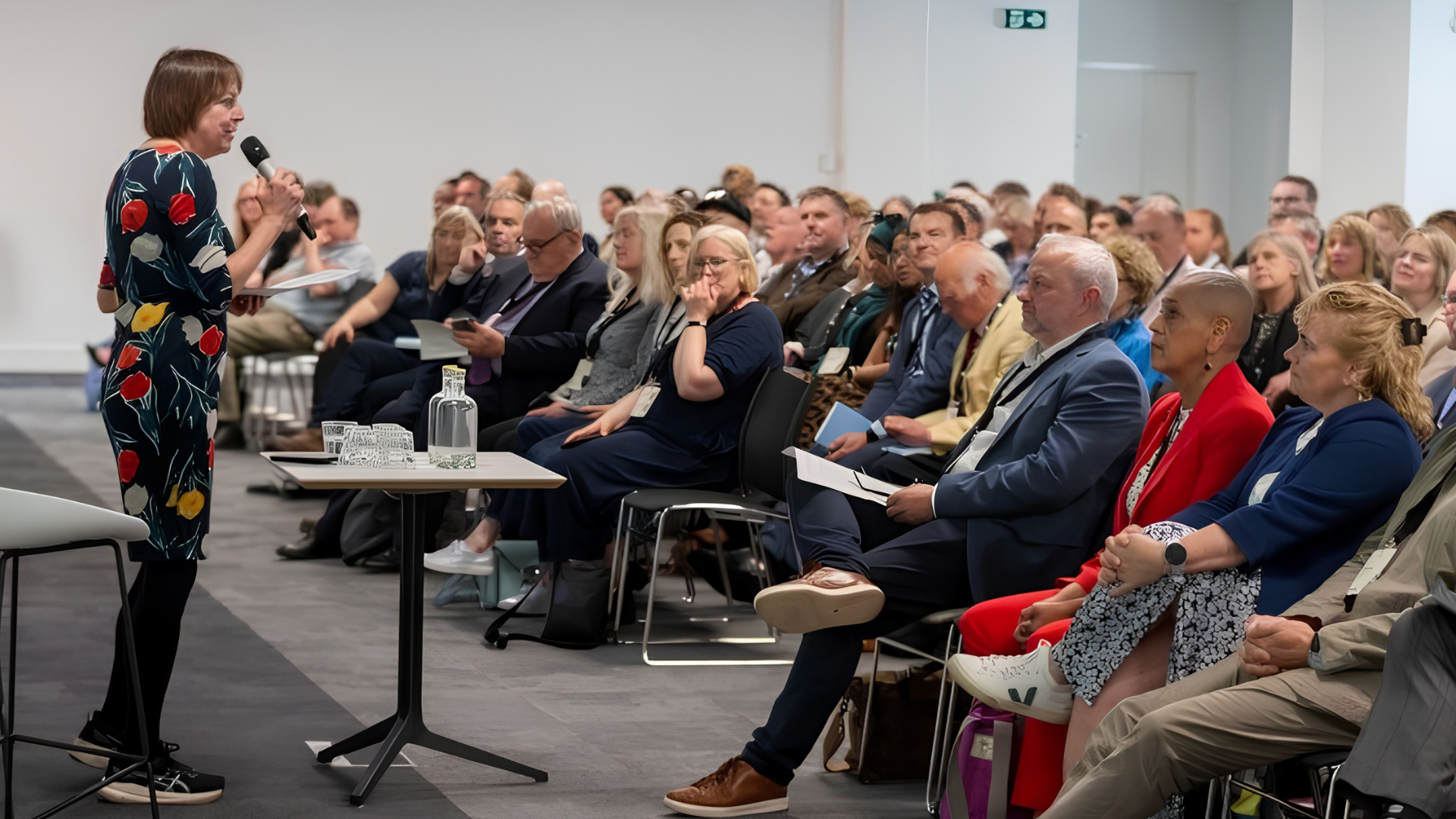
Remarks by Dr Peter O’Brien on a panel at the launch of The Civic Exchange – University of Leeds on Thursday 30 April 2026.
I have worked in partnership and collaboration roles for over twenty years. The structures and the institutional architecture may have changed, and they will continue to change, but the principles and values of how to build, sustain and strengthen collaboration remain constant. These include inclusivity; integrity; transparency; innovation; etc are things we should hold dear.
In my experience, collaboration tends to flounder or fail because policies or strategies change too regularly, often without sufficient notice or genuine engagement, and we are often afraid to encourage or enable experimentation to take place. And we are impatient to evaluate, to learn from experiences and to adapt and change going forward.
The higher education (HE) sector in this country has not necessarily been designed from a default position to drive closer collaboration between universities and form strong partnerships with local and regional partners. Competition – whilst not always intrinsically bad – has for a long time shaped how the HE system has operated.
I think it is a zero-sum game and a false choice to believe that you can strive for excellence amongst your peers, within a region, country, or internationally, but not also focus institutional priorities on forming wider and deeper place-based collaborations within a region or locality.
The University of Leeds is one twelve member institutions in the Yorkshire Universities (YU) group. It is our largest member on several metrics. It is highly successful, and it will be even more successful in the future, because it takes place and civic collaboration seriously and is able to demonstrate its value to the city, West Yorkshire and the wider Yorkshire region, whilst also being instrumental, visible and impactful internationally. This University brings something distinctive and valuable to the eco-system of universities we have in the region. Several key policy and macro factors are encouraging more collaborations between universities and with local, devolved and national government, as well as industry, business and communities. It is easy to talk a good game, but the planned Civic Exchange illustrates that this University is taking its place role seriously and that it aims to build on its leadership role in some critical areas.
These include: the Yorkshire and Humber Policy Engagement Network (Y-PERN); the Yorkshire Policy Innovation Partnership (YPIP); the Yorkshire and Humber Climate Commission (YHCC); Space Hub Yorkshire (SHY); Health Innovation Yorkshire and Humber (HIYH); and the Yorkshire and Humber Applied Research Collaboration (ARC) in health. The University of Leeds is also pooling its capacity and expertise to help my team and our other member institutions take forward a new policy research framework as part of the West Yorkshire HE Compact we signed with Mayor Tracy Brabin in October 2025.
Whilst in the City of Leeds, the University is a lead partner in the Leeds Academic Health Partnership and the Leeds Anchors Network. I am delighted to see that so many Inugural Civic Fellows from the Civic Exchange have been recognised for their skills, dedication and expertise in building and sustaining collaborations within and across the region.
The complex challenges and opportunities we face cannot be solved by one institution or organisation alone. Partnerships and collaborations are more essential than ever. I hope that, with the launch of the Civic Exchange, policymakers and leaders in the national HE sector recognise the commitment given by the University of Leeds and introduce more sector incentives and mechanisms to reflect and reward this work. In my view, this agenda is not a nice to have or add on. It is fundamental and essential. If we ignore its value, then we will all be the poorer for it.